
Explore our projects

With a comprehensive network comprising more than 30 industry specialists, Zerogram offers a spectrum of expertise encompassing decarbonisation strategy, advisory services, smart local energy systems, energy infrastructure, renewable technologies, heat decarbonisation measures, energy management, and energy systems integration.

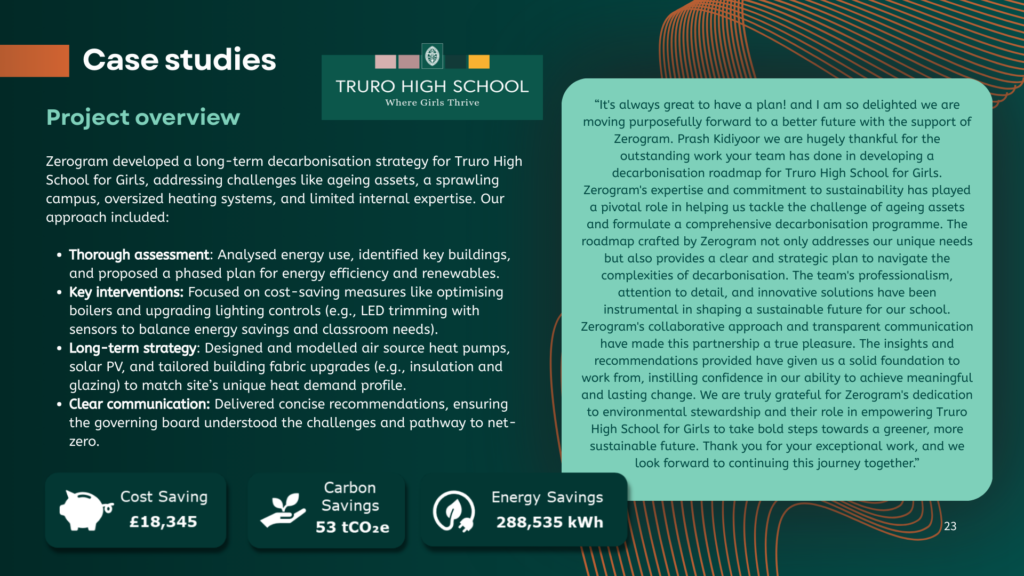
Truro Girls High School

Zerogram developed a long-term decarbonisation strategy for Truro High School for Girls, addressing challenges like ageing assets, a sprawling campus, oversized heating systems, and limited internal expertise. Our approach included:

Thorough assessment: Analysed energy use, identified key buildings, and proposed a phased plan for energy efficiency and renewables.
Key interventions: Focused on cost-saving measures like optimising boilers and upgrading lighting controls (e.g., LED trimming with sensors to balance energy savings and classroom needs).

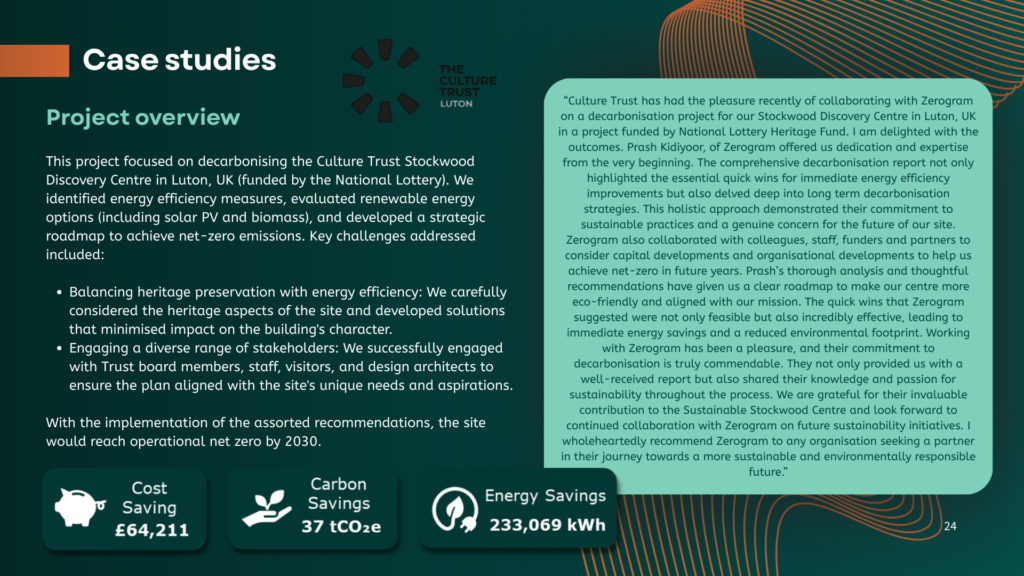
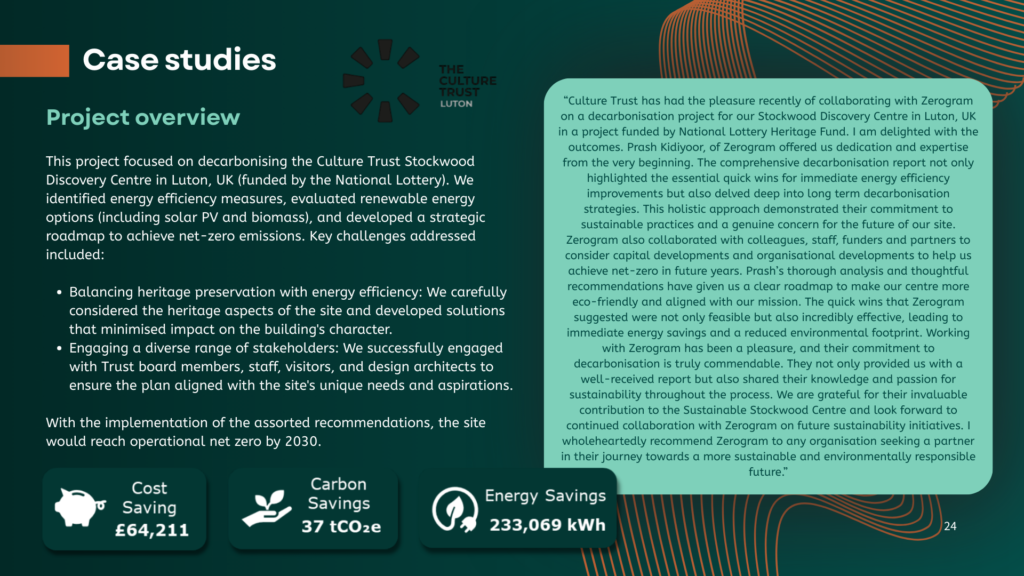
The Culture Trust Luton

This project focused on decarbonising the Culture Trust Stockwood Discovery Centre in Luton, UK (funded by the National Lottery). We identified energy efficiency measures, evaluated renewable energy options (including solar PV and biomass), and developed a strategic roadmap to achieve net-zero emissions. Key challenges addressed included:

Balancing heritage preservation with energy efficiency: We carefully considered the heritage aspects of the site and developed solutions that minimised impact on the building’s character.

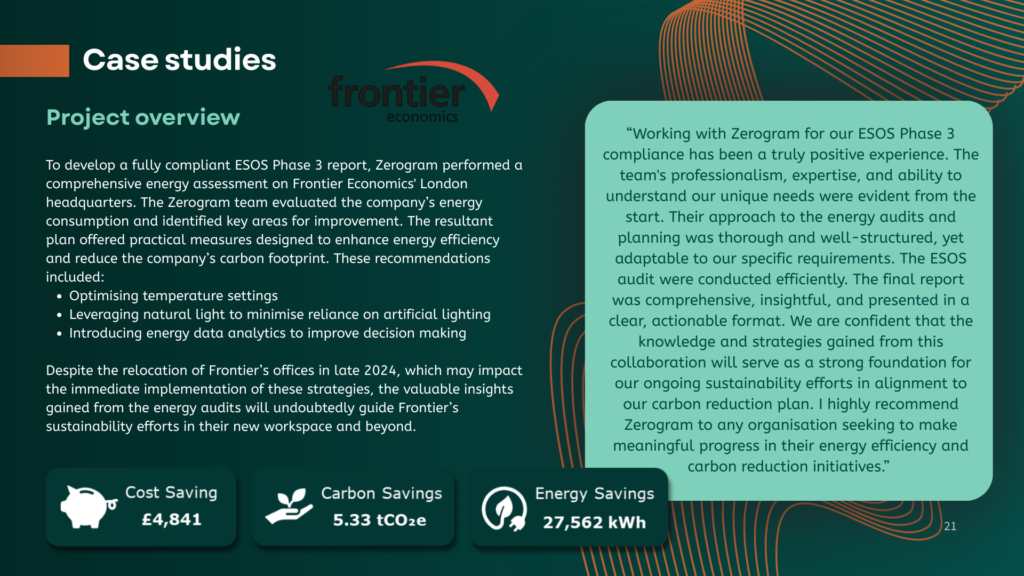
Frontier Economics

To develop a fully compliant ESOS Phase 3 report, Zerogram performed a comprehensive energy assessment on Frontier Economics’ London headquarters. The Zerogram team evaluated the company’s energy consumption and identified key areas for improvement. The resultant plan offered practical measures designed to enhance energy efficiency and reduce the company’s carbon footprint. These recommendations included:

  • Optimising temperature settings
  • Leveraging natural light to minimise reliance on artificial lighting
  • Introducing energy data analytics to improve decision making
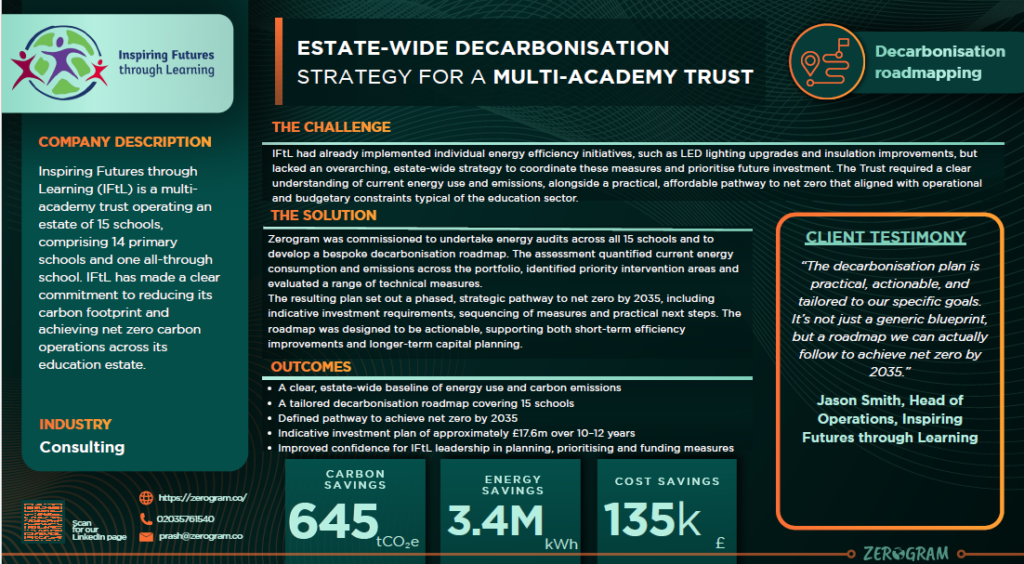
Inspiring Futures through Learning

Zerogram was commissioned by the Multi Academy Trust (MAT) – Inspired Futures Learning (IFtL) – to reduce the carbon footprint of their 15-school estate. The Zerogram team conducted comprehensive energy audits and site surveys to develop a decarbonisation plan tailored to IFtL’s specific needs.

  • Renewable energy implementation (e.g. Solar PV, Wind)
  • Heat decarbonisation interventions (e.g. Air Source Heat Pumps
  • Energy and data management optimisation (e.g. BMS, thermostatic radiator valves)
  • Behavioural change measures
    Building fabric upgrades
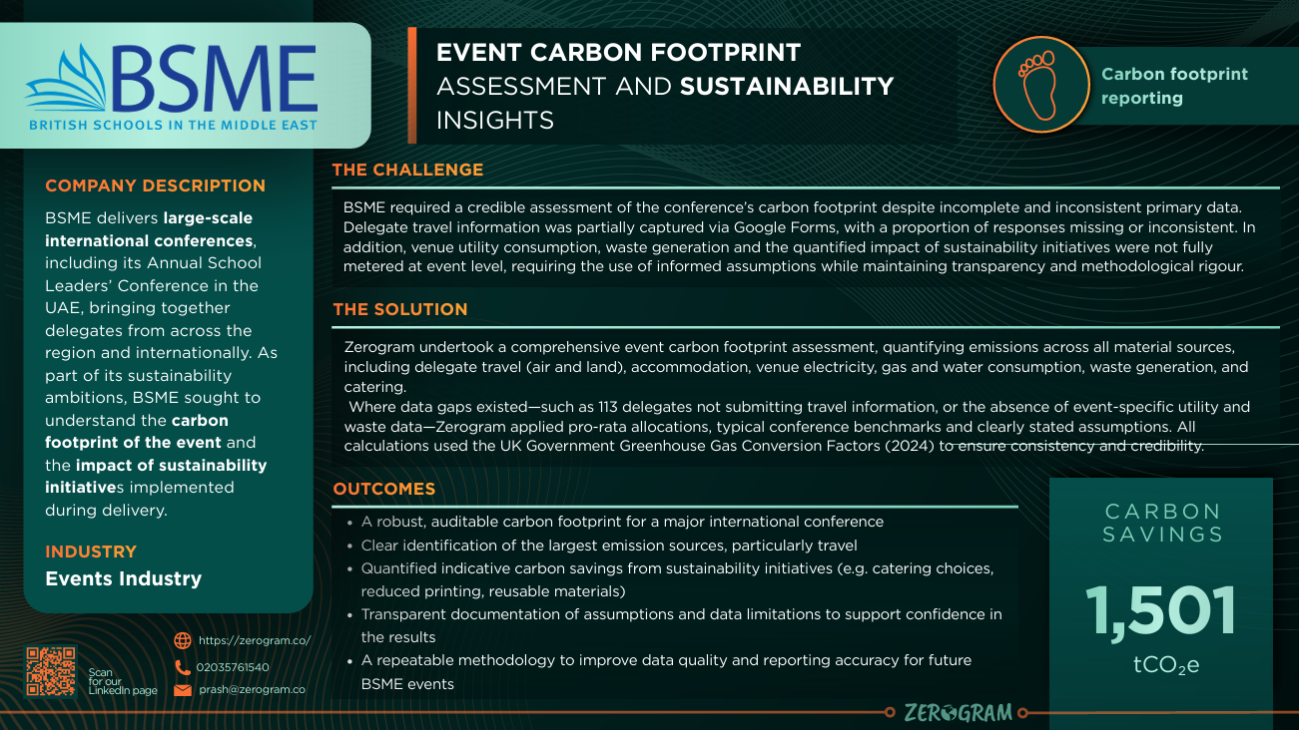
BSME

BSME required a credible assessment of the conference’s carbon footprint despite incomplete and inconsistent primary data. Delegate travel information was partially captured via Google Forms, with a proportion of responses missing or inconsistent

Zerogram undertook a comprehensive event carbon footprint assessment, quantifying emissions across all material sources, including delegate travel (air and land), accommodation, venue electricity, gas and water consumption, waste generation, and catering. Pro-rata allocations, typical conference benchmarks and clearly stated assumptions were applied

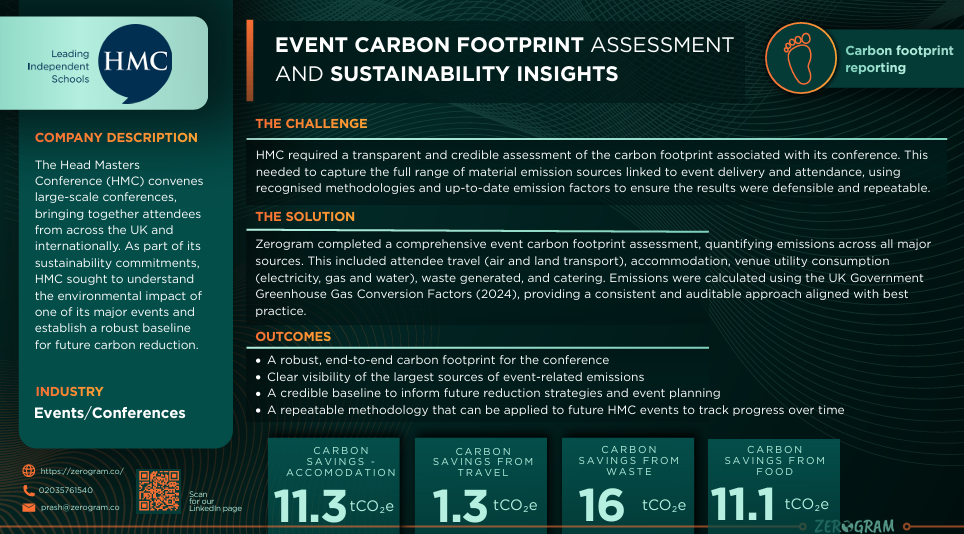
The Head Masters Conference

HMC required a transparent and credible assessment of the carbon footprint associated with its conference. This needed to capture the full range of material emission sources linked to event delivery and attendance, using recognised methodologies and up-to-date emission factors to ensure the results were defensible and repeatable.

Zerogram completed a comprehensive event carbon footprint assessment, quantifying emissions across all major sources. This included attendee travel (air and land transport), accommodation, venue utility consumption (electricity, gas and water), waste generated, and catering.
Do you need a net zero plan for your business?

Zerogram offers a spectrum of expertise encompassing decarbonisation strategy, advisory services, smart local energy systems, energy infrastructure, renewable technologies, heat decarbonisation measures, energy management, and energy systems integration.

Scroll to Top