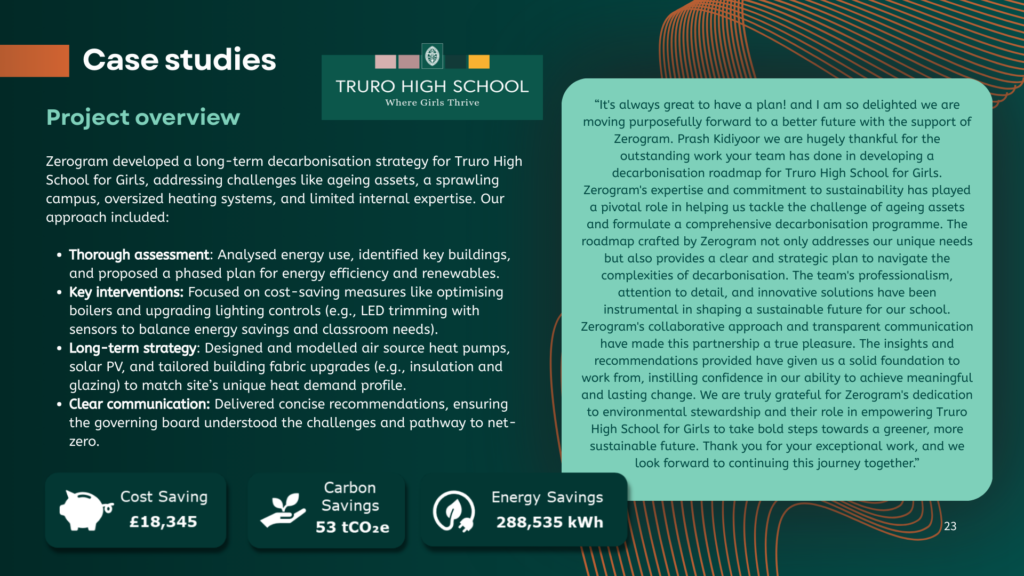
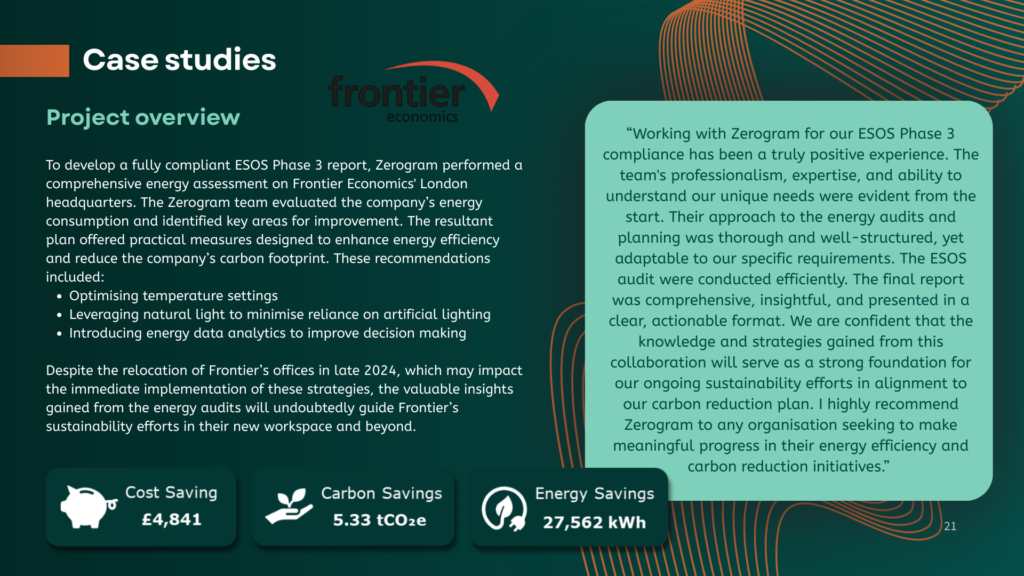
- Optimising temperature settings
- Leveraging natural light to minimise reliance on artificial lighting
- Introducing energy data analytics to improve decision making
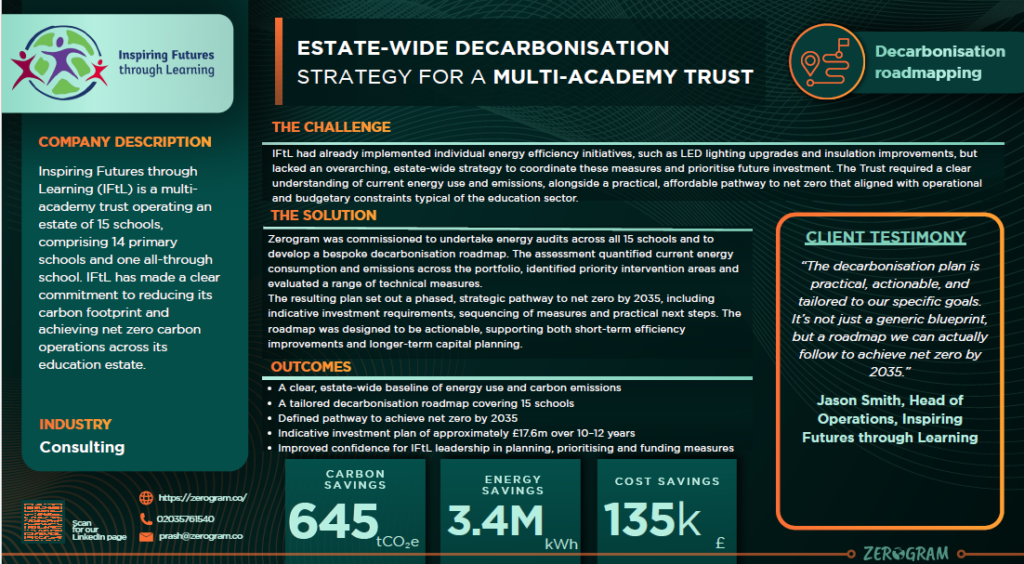
- Renewable energy implementation (e.g. Solar PV, Wind)
- Heat decarbonisation interventions (e.g. Air Source Heat Pumps
- Energy and data management optimisation (e.g. BMS, thermostatic radiator valves)
- Behavioural change measures
Building fabric upgrades
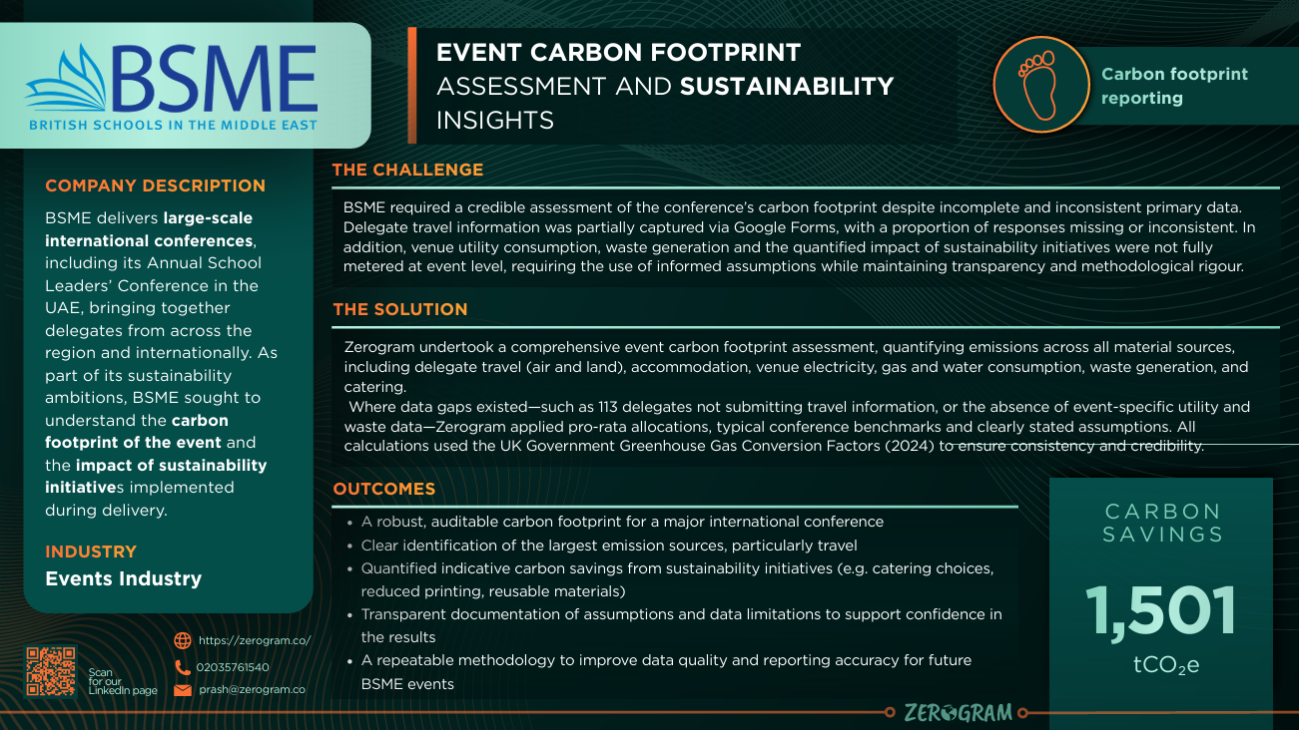
BSME required a credible assessment of the conference’s carbon footprint despite incomplete and inconsistent primary data. Delegate travel information was partially captured via Google Forms, with a proportion of responses missing or inconsistent
Zerogram undertook a comprehensive event carbon footprint assessment, quantifying emissions across all material sources, including delegate travel (air and land), accommodation, venue electricity, gas and water consumption, waste generation, and catering. Pro-rata allocations, typical conference benchmarks and clearly stated assumptions were applied
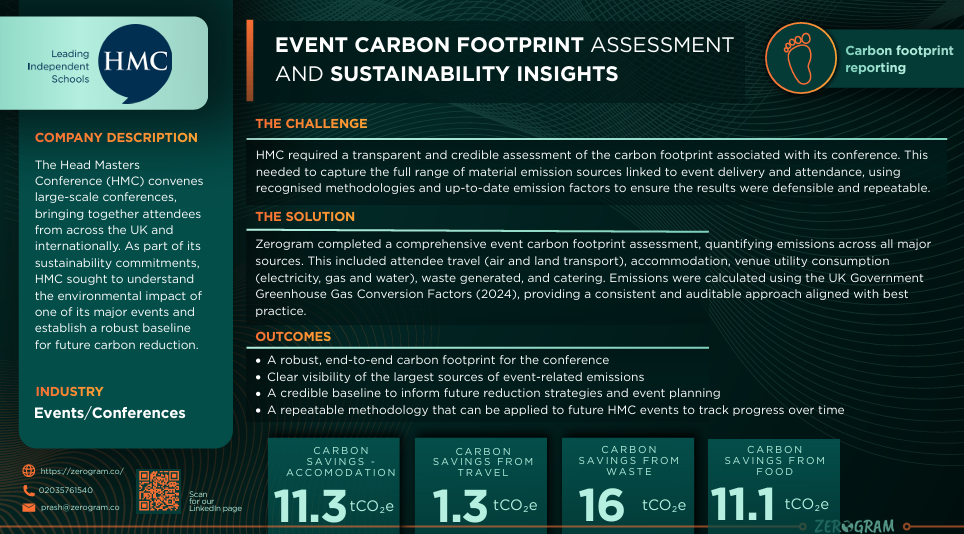
HMC required a transparent and credible assessment of the carbon footprint associated with its conference. This needed to capture the full range of material emission sources linked to event delivery and attendance, using recognised methodologies and up-to-date emission factors to ensure the results were defensible and repeatable.
Zerogram completed a comprehensive event carbon footprint assessment, quantifying emissions across all major sources. This included attendee travel (air and land transport), accommodation, venue utility consumption (electricity, gas and water), waste generated, and catering.